



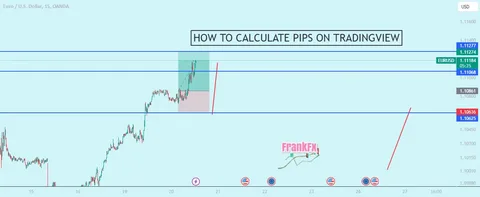
So, you’re staring at your trading platform, finger hovering over the button, and a question pops into your head: how many pips should I aim for per trade? It feels like the million-dollar question, doesn’t it? If only there was a magic number we could all use. But here’s the kicker—treating pip targets like a universal setting is like trying to fit a square peg in a round hole. The truth is, that perfect number is deeply personal, woven from the fabric of your strategy, your account size, and your own risk tolerance. This guide isn’t about giving you a one-size-fits-all answer; it’s about handing you the blueprint to build your own.
What Exactly Are We Talking About? Pips Defined
Before we dive into the nitty-gritty of targets, let’s get crystal clear on our main unit. A “pip” is a standard unit of movement in forex trading, usually the fourth decimal place in a currency pair like EUR/USD. If EUR/USD moves from 1.1050 to 1.1051, that’s a one-pip move. It’s the heartbeat of the market, the basic building block of profit and loss. Understanding this is crucial because when we ask how many pips should I aim for per trade, we’re really asking about the distance we expect the price to travel in our favor. It’s the foundation of everything that follows.
The Myth of the “Perfect” Pip Target
Let’s bust a myth right out of the gate. Scouring forums for that golden pip target is a fool’s errand. Why? Because a 50-pip target is a mountain for a scalper and a mere molehill for a long-term swing trader. The context is king. Your trading style isn’t just a preference; it’s the engine that determines everything. A scalper might thrive on 5-15 pips, in and out like a swift hawk. A day trader may look for 20-50 pips, catching the daily waves. A swing trader? They could be eyeing 100 pips or more, riding the major trends. So, you see, the question isn’t just how many pips should I aim for per trade—it’s what kind of trader are you?
The Real Drivers: What Dictates Your Pip Goal?
Forget magic numbers. Your ideal target is a puzzle with three key pieces. Ignore any one, and the whole picture falls apart.
- Your Trading Strategy & Timeframe: This is your North Star. Your strategy’s rules should inherently suggest where logical profit targets lie. Are you trading bounces off key support? Then your target might be the next resistance level, which could be 30 pips away. Trading a breakout? Your target could be the height of the consolidation pattern. Your timeframe chart is your reality; a 10-pip move on a 5-minute chart is a storm, while on a daily chart, it’s barely a ripple.
- The Sacred Risk-to-Reward Ratio (R:R): This is non-negotiable. You must know your potential loss (stop-loss in pips) before you can define your gain. A professional approach to how many pips should you aim for per trader is always framed by R:R. Aiming for a 1:2 ratio means your target (reward) in pips should be at least double your stop-loss (risk). If your strategy demands a 20-pip stop-loss to breathe, then a 40-pip target is your minimum for a quality setup. This ratio protects you; even if you’re wrong half the time, you can still be profitable.
- Market Volatility & Instrument: Trading the GBP/JPY? It’s a wild stallion that can easily run 100 pips in a day. Trading the EUR/CHF? It’s often a calmer pony. You must align your expectations with the instrument’s average daily range. Aiming for 50 pips on a normally quiet pair will leave you waiting forever, while a 10-pip target on a volatile pair might be hit before you’ve even finished your coffee.
The Professional’s Calculation: From Theory to Practice
Let’s put this into action with a practical example. Imagine you’re a day trader looking at EUR/USD.
- You identify a clean setup where a sensible stop-loss is 25 pips away.
- You adhere to a strict 1:3 risk-to-reward policy.
- Your Calculation: Stop-Loss (25 pips) x Reward Multiple (3) = 75-pip profit target.
But wait—is that realistic? You check the average daily range and see it’s about 70 pips. A 75-pip target is ambitious but possible on a strong trending day. You might decide to adjust to a 1:2.5 ratio for a 62.5-pip target, increasing the probability. This is the dance between ambition and reality. This calculated method transforms the vague question of how many pips should I aim for per trade into a precise, strategic decision.
Conclusion
So, how many pips should you aim for per trade? As we’ve seen, it’s the wrong question if asked in isolation. The right question is: What does my strategy, my risk parameters, and the current market environment tell me is a high-probability target? Your pip target is not a lone star; it’s part of a constellation that includes your stop-loss, your risk percentage, and your trading plan. Start by defining your risk. Let your strategy’s logic point to the target. Use the risk-to-reward ratio as your quality filter. When you synchronize these elements, you stop chasing arbitrary numbers and start executing trades with precision and confidence. The market doesn’t reward those who ask for a simple number; it rewards those who understand the complex, beautiful equation of profitable trading.
