



Edentulism, or the complete loss of natural teeth across an entire arch, drastically alters facial aesthetics, limits nutritional intake, and severely impacts phonetic abilities. For generations, removable acrylic dentures served as the default remedy for this condition. However, these traditional prosthetics frequently slip during speech, cause painful friction sores on the gums, and accelerate bone resorption in the jaw due to a lack of structural stimulation. Modern restorative dentistry has shifted away from these temporary fixes, moving decisively toward permanently anchored solutions that replicate both the visible crown and the unseen root structures of natural teeth.
Central to this permanent approach is the use of all-on-6 dental implants. This sophisticated methodology utilizes six strategically positioned titanium posts embedded directly into the maxillary (upper) or mandibular (lower) jawbone. These posts act as resilient artificial roots. Over a period of several months, a biological process called osseointegration occurs, wherein the living bone tissue fuses tightly to the titanium surface. This cellular-level fusion creates an immovable foundation capable of supporting a full bridge of custom-crafted, highly durable artificial teeth.
Anatomical Advantages of a Multi-Anchor Framework
When comparing full-arch restorations, the sheer number of anchoring points plays a critical role in the long-term success of the prosthetic. By utilizing six distinct implants rather than fewer alternatives, the system distributes occlusal forces the intense, repetitive pressures generated during chewing and grinding much more evenly across the jaw. This equitable distribution mitigates stress concentrations on any single post, preserving the integrity of the surrounding bone.
High-tier dental facilities, such as Dentprime, often favor this expanded framework for patients who possess sufficient bone volume, as the added anchors provide unparalleled structural rigidity. This significantly reduces the risk of prosthetic fracture over decades of daily use. Furthermore, the presence of these six titanium roots consistently stimulates the surrounding bone tissue, halting the severe atrophic bone loss that typically follows mass tooth extraction and preserving the lower third of the patient’s facial profile.
The Procedural Workflow and Precision Imaging
The journey from severe tooth loss to a fully restored dental arch is a highly calculated medical procedure, relying heavily on digital dentistry. It begins with extensive diagnostic imaging. Practitioners utilize Cone Beam Computed Tomography (CBCT) to capture three-dimensional cross-sections of the patient’s craniofacial anatomy. This imaging dictates the exact trajectory, depth, and placement of each titanium screw, ensuring surgeons safely bypass critical nerve canals and sinus cavities.
Following the surgical insertion of the posts, a temporary acrylic bridge is usually affixed on the same day. This provisional arch allows the patient to maintain aesthetics and minimal function while the underlying bone heals and solidifies its grip on the metal.
Crafting the Final Aesthetic Layer
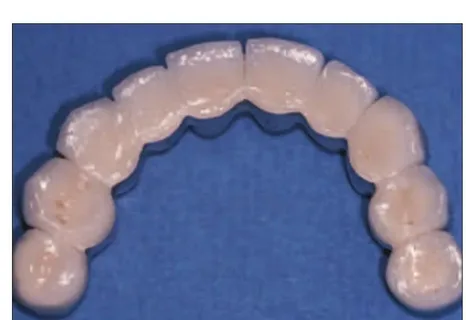
Once the healing phase concludes, the focus shifts to the final aesthetic and functional restoration. The permanent prosthetic bridge that attaches to the six anchors is typically milled from advanced monolithic zirconia or crafted with an internal titanium framework layered with high-grade dental porcelain. These materials are chosen not just for their immense fracture toughness, but for their superior optical properties.
A master dental technician customizes the shade, translucency, and shape of the synthetic teeth to align flawlessly with the patient’s facial symmetry, skin tone, and natural smile line. The result is an arch that catches and reflects light exactly like organic human enamel, deliberately avoiding the opaque, artificial look of older, mass-produced denture plastics.
Determining Biological Suitability
Executing this intervention requires careful medical vetting. The ideal candidate must exhibit adequate vertical and horizontal bone density to encapsulate the titanium screws securely. Individuals with a history of severe periodontitis may have suffered significant bone deterioration, rendering immediate placement highly unpredictable. In such scenarios, surgeons must first perform supplementary procedures, such as sinus lifts or bone grafting, to rebuild the necessary foundational volume before the six posts can be safely anchored. Systemic health factors, particularly uncontrolled diabetes or active smoking habits, are also heavily scrutinized, as they impede microvascular circulation and significantly increase the risk of implant failure.
Long-Term Maintenance Protocols
While the prosthetic teeth and titanium posts are impervious to biological decay, the surrounding gingival tissues and underlying bone remain susceptible to bacterial infection. A condition known as peri-implantitis can develop if plaque accumulates around the base of the artificial roots, potentially eroding the supporting bone. Standard string floss is often insufficient for cleaning beneath full-arch bridges; instead, patients must utilize water irrigators and specialized interdental brushes to flush out microscopic debris trapped beneath the prosthetic framework. Routine professional examinations and ultrasonic cleanings ensure that the hardware remains securely integrated and the surrounding soft tissues stay highly resilient against infection.
